
Solving Basement Moisture Problems During a Home Renovation is one of the most critical steps homeowners in Toronto overlook until it’s too late. You can install new flooring, build beautiful finished walls, and turn the basement into a comfortable living space, but if moisture remains hidden inside the structure, those improvements can quickly deteriorate. Damp drywall, warped flooring, and mold growth often begin with moisture issues that were never properly addressed during renovation.
Toronto homes are especially vulnerable to basement moisture because of aging foundations, dense clay soil, seasonal rainfall, and repeated freeze–thaw cycles. These conditions push water toward foundation walls and create cracks that allow moisture to enter.
For homeowners planning a renovation, identifying and fixing moisture problems early can prevent expensive structural repairs and protect the investment in a finished basement. Understanding the causes, warning signs, and renovation solutions is the first step toward creating a dry and durable basement space.
Why Basement Moisture Problems Are Common in Toronto Homes
Many residential properties in Toronto were built decades ago when waterproofing standards were far less advanced than they are today. Older homes often lack modern drainage systems, foundation protection membranes, and proper exterior grading.
Over time, natural soil movement and seasonal climate conditions gradually weaken these protective barriers. Clay-heavy soil surrounding many Toronto neighborhoods holds water for long periods, increasing pressure on basement walls after heavy rainfall or snowmelt.
As this pressure builds, moisture begins to find pathways into the basement through tiny cracks, porous concrete, or weak construction joints. When homeowners decide to renovate the basement without resolving these structural vulnerabilities, new materials can trap that moisture and accelerate deterioration.
This is why solving basement moisture problems during a home renovation is not simply a preventative step. It is a structural necessity that protects both the home and the renovation investment.
Signs Your Basement Has Moisture Issues Before Renovation
Before beginning a basement renovation, homeowners should carefully evaluate the condition of the space. Moisture problems often reveal themselves through subtle warning signs that appear long before visible water leaks occur.
The most common indicators include:
- A persistent musty smell that lingers even after cleaning
- White chalky residue on concrete walls known as efflorescence
- Peeling paint or bubbling wall finishes
- Dark stains on foundation walls or floors
- Small patches of mold in corners or behind storage items
- Condensation forming on cold pipes or basement windows
Even minor symptoms can signal larger moisture issues hidden inside walls or beneath flooring. Addressing these early signs allows contractors to solve the root cause before installing insulation, drywall, and flooring materials.
Major Sources of Basement Moisture
Basement moisture rarely originates from a single source. In many Toronto homes, several environmental and structural conditions contribute to the problem simultaneously.
| Moisture Source | Description | Typical Solution |
| Groundwater pressure | Water accumulates in soil and pushes against foundation walls | Exterior waterproofing or drainage systems |
| Foundation cracks | Structural cracks allow water to seep into the basement | Epoxy or polyurethane crack repair |
| Poor exterior grading | Soil slopes toward the house instead of away from it | Landscape regrading |
| Condensation | Warm humid air meets cold basement surfaces | Insulation and ventilation improvements |
| Plumbing leaks | Small pipe leaks hidden inside walls or ceilings | Pipe repair or replacement |
| Aging drainage systems | Old weeping tiles fail to move groundwater away from the house | Drain replacement or upgrades |
Understanding which of these sources is responsible for moisture intrusion helps contractors design the most effective solution during renovation.
Why Moisture Must Be Fixed Before Renovation
Finishing a basement without addressing moisture is similar to building over a hidden structural flaw. Everything may appear stable at first, but over time the damage begins to surface.
Moisture trapped behind newly finished walls can lead to mold growth, deterioration of insulation, and structural damage to framing materials. Flooring systems may also warp or separate if humidity levels remain too high beneath the surface.
When contractors prioritize solving basement moisture problems during a home renovation, they protect both the new materials and the long-term structural integrity of the home. A properly waterproofed basement also improves indoor air quality and prevents unpleasant odors from developing inside the living space.
Simply put, moisture control forms the foundation of every successful basement renovation.
Effective Moisture Solutions Used During Basement Renovations
Professional contractors rely on several specialized techniques to control and eliminate basement moisture. Each method targets a different pathway through which water can enter the home.
Common renovation solutions include:
- Exterior waterproofing systems that stop groundwater before it reaches the foundation
- Interior drainage channels installed beneath basement floors
- Sump pump systems that actively remove collected groundwater
- Foundation crack injection to seal structural openings
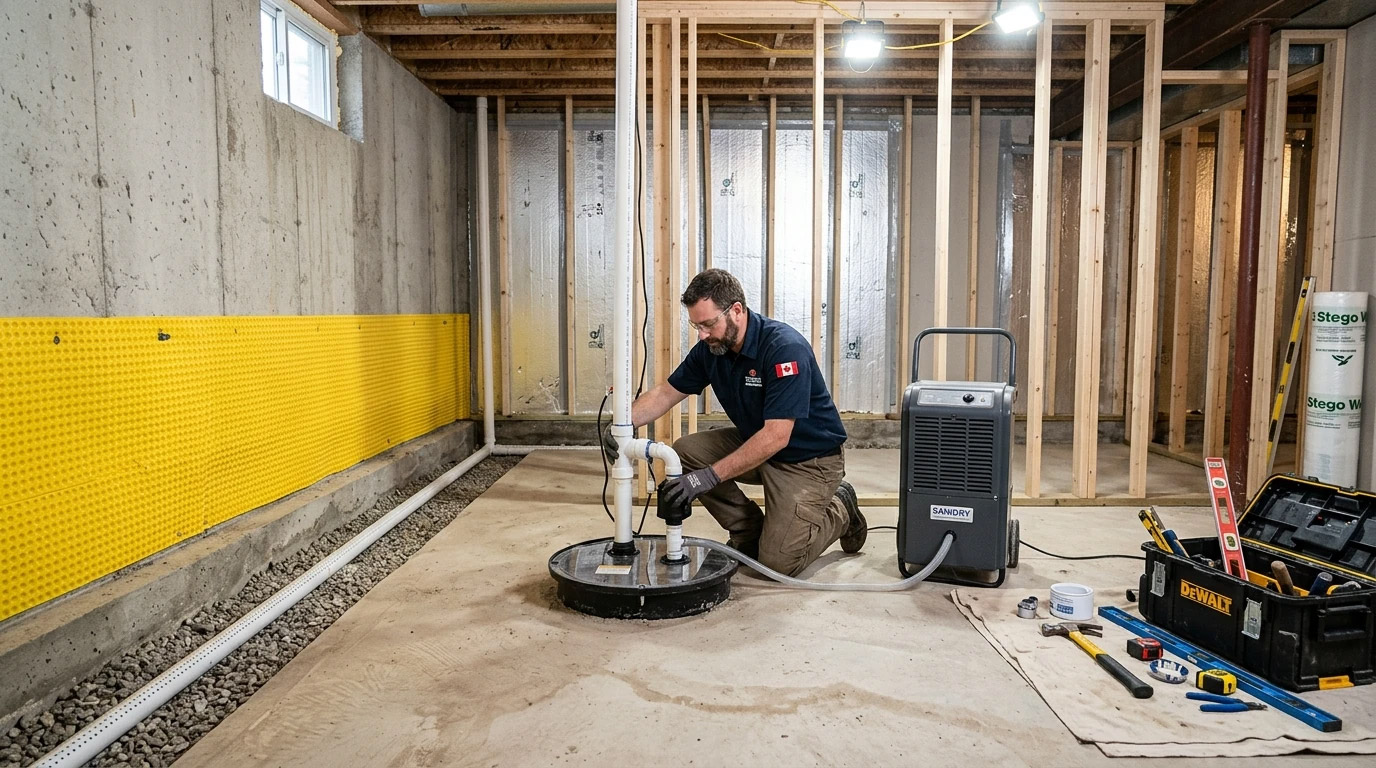
- Drainage board installation to redirect water downward into drainage pipes
Selecting the right solution requires understanding the underlying moisture source. In some renovation projects, a combination of several methods is necessary to fully protect the basement.
Exterior Waterproofing: The Most Comprehensive Protection
Exterior waterproofing is widely considered the most reliable long-term solution for serious basement moisture issues. Instead of managing water after it enters the basement, this approach prevents moisture from reaching the foundation wall in the first place.
The process begins with excavation around the home’s foundation to expose the exterior wall surface. Contractors then clean the wall, repair cracks, and apply waterproof membranes designed to block groundwater penetration. A drainage board is typically added to direct water downward toward a drainage pipe system installed at the base of the foundation.
Although exterior waterproofing requires significant labor, it provides long-lasting protection. For many Toronto homeowners undergoing major basement renovations, completing this work during the renovation stage ensures the finished space remains dry for decades.
Improving Basement Ventilation and Humidity Control
Not all basement moisture comes from groundwater. Indoor humidity can also create damp conditions if ventilation is inadequate.
Several practical upgrades help control indoor moisture levels:
- Installing a dedicated basement dehumidifier
- Integrating the basement with the home’s HVAC airflow system
- Adding a Heat Recovery Ventilation (HRV) unit
- Using moisture-resistant insulation materials
- Installing vapor barriers behind finished walls
These improvements stabilize humidity levels and prevent condensation from forming on cool basement surfaces. During Toronto’s humid summer months, proper ventilation becomes especially important in finished basement spaces.
Moisture-Resistant Materials for Basement Renovations
Selecting the right building materials plays an important role in preventing future moisture damage. Certain products are specifically designed to perform better in environments where humidity levels fluctuate.
| Material Type | Recommended Option | Reason |
| Flooring | Vinyl plank or ceramic tile | Resists water damage |
| Insulation | Rigid foam board insulation | Does not absorb moisture |
| Wall framing | Metal studs or pressure-treated wood | Reduces risk of rot |
| Drywall | Mold-resistant drywall panels | Prevents mold development |
| Subfloor | Dimple membrane subfloor panels | Promotes airflow beneath flooring |
When these materials are used alongside proper waterproofing, they provide additional protection against long-term moisture exposure.
Basement Renovation Waterproofing Checklist
Before completing a basement renovation, experienced contractors usually follow a systematic inspection and prevention checklist to ensure moisture problems are fully resolved.
A thorough checklist typically includes the following steps:
- Inspect foundation walls for visible cracks or damage
- Verify that exterior soil slopes away from the house
- Clean and extend downspouts to direct water away from the foundation
- Test sump pumps and drainage systems
- Seal wall penetrations around pipes and cables
- Install vapor barriers where necessary
- Measure basement humidity levels after construction
Following this type of checklist helps confirm that the renovated basement is protected against both structural water intrusion and indoor humidity buildup.
Cost Considerations for Moisture Solutions in Toronto
The cost of solving basement moisture problems during a home renovation varies depending on the severity of the issue and the solution required. Some minor repairs can be completed relatively quickly, while larger waterproofing projects involve excavation and significant labor.
| Solution | Estimated Cost Range |
| Crack repair | 500–500 – 500–1,500 per crack |
| Interior drainage system | 3,000–3,000 – 3,000–10,000 |
| Exterior waterproofing | 10,000–10,000 – 10,000–30,000+ |
| Sump pump installation | 1,500–1,500 – 1,500–4,000 |
| Dehumidifier installation | 300–300 – 300–1,200 |
Although these costs may seem substantial, addressing moisture problems during renovation is significantly less expensive than repairing water damage after the basement has already been finished.
Professional Inspection vs DIY Moisture Fixes
Homeowners sometimes attempt to solve basement moisture problems using waterproof paints or surface sealants. These products may temporarily reduce visible dampness, but they rarely address the underlying cause of the moisture intrusion.
Professional contractors approach the problem more systematically. Their evaluation process typically involves moisture testing, inspection of foundation walls, drainage assessment, and analysis of exterior grading conditions around the property.
This diagnostic approach allows contractors to determine whether moisture originates from groundwater pressure, structural cracks, interior humidity, or plumbing leaks. Once the source is identified, a targeted solution can be implemented during the renovation.
For homeowners investing in a basement renovation, professional assessment ensures the finished space remains dry, healthy, and structurally sound for many years.
Conclusion
Solving basement moisture problems during a home renovation is essential for creating a durable and healthy basement environment. Toronto homes often face unique challenges such as aging foundations, clay soil, seasonal rainfall, and freeze–thaw cycles that place constant pressure on basement walls.
By identifying warning signs early, addressing structural moisture sources, installing proper drainage systems, and selecting moisture-resistant materials, homeowners can prevent long-term damage to their renovated space. Waterproofing measures such as exterior membranes, interior drainage systems, and improved ventilation help maintain stable humidity levels and protect construction materials.
Ultimately, a successful basement renovation begins long before new walls or flooring are installed. It begins with solving the moisture issues that threaten the integrity of the entire space.
A dry foundation ensures that the investment in a renovated basement will remain safe, comfortable, and functional for decades.
FAQ
How do I know if my basement has a moisture problem before renovating?
Common signs include musty odors, efflorescence on concrete walls, peeling paint, condensation on windows or pipes, and small mold spots. A professional moisture inspection can confirm the extent of the issue.
Can interior drainage systems replace exterior waterproofing?
Interior systems manage water after it enters the basement, while exterior waterproofing stops water before it reaches the walls. In some homes, contractors use both methods together.
How long do basement waterproofing systems last?
High-quality waterproofing systems installed by professionals can last between 20 and 40 years depending on soil conditions, maintenance, and drainage performance.