
Garden Suites & Laneway Homes
Garden Suites & Laneway Homes in
Toronto, Design-Build Backyard Living Space
If you are exploring garden suites Toronto homeowners build for more space, rental income, or multi-generational living, your first priority should be feasibility and approvals, not finishes. Backyard housing projects succeed when the design matches your lot realities, utility servicing options, and the permit pathway from the beginning. Select Build Design delivers a design-build approach that connects planning, permits, and construction into one coordinated timeline.
We also build laneway homes Toronto property owners choose when they want a separate dwelling with privacy and long-term flexibility. Whether your goal is a compact rental suite, a space for aging parents, or a backyard studio, the best results come from disciplined site planning, clear decision points, and construction that protects quality and durability.
Both project types can add meaningful value, but they are not identical. Garden suites and laneway homes follow different site access patterns, layout constraints, and approval considerations. This page explains the difference, what the process looks like, and how to move forward with confidence.
Garden Suites Toronto, Why Homeowners Build Backyard Suites
A garden suite is a detached living space built in the backyard, designed to function as a self-contained home. Many homeowners pursue this option when they want additional space without leaving a neighborhood they already love. Others build garden suites to support rental income, create a private space for family members, or add a dedicated studio or work-from-home setup.
A strong garden suite should feel like a real home, not a temporary structure. That means thoughtful layout, natural light, storage planning, and a practical utility strategy. As a garden suite builder Toronto homeowners rely on, we focus on a plan that balances comfort, approvals, and buildability so the project can move forward without avoidable redesign.
Laneway Homes Toronto, A Separate Home on Your Property
A laneway home is typically built at the rear of a property and oriented to a laneway for access. Many Toronto lots make laneway housing an attractive option because it provides a separate home with independent privacy and clear access. It can function as a long-term rental, a downsizing option for family, or a flexible secondary home that supports changing needs over time.
When people search for laneway suite Toronto options, they are usually looking for an ADU-style solution that is legal, durable, and well-integrated into the property. The right plan needs careful attention to access, servicing, and long-term maintenance. As your laneway home builder Toronto team, we coordinate the details that make the home feel intentional and operate smoothly year-round.
Pre-Approved Plans for Garden and Laneway Suite Plans Toronto
Pre-approved plans can be a helpful reference point, especially when you want a faster path into early planning. When people search for pre approved garden and laneway suite plans Toronto, they are often trying to reduce design time and improve predictability. In practice, pre-approved options can support early direction, but your property conditions still matter.
Site realities such as access, servicing strategy, existing structures, and your specific goals can make a custom plan the better choice. The best approach is to review your property first, then decide whether a pre-approved direction fits, or whether a tailored design will lead to fewer compromises and better long-term performance.
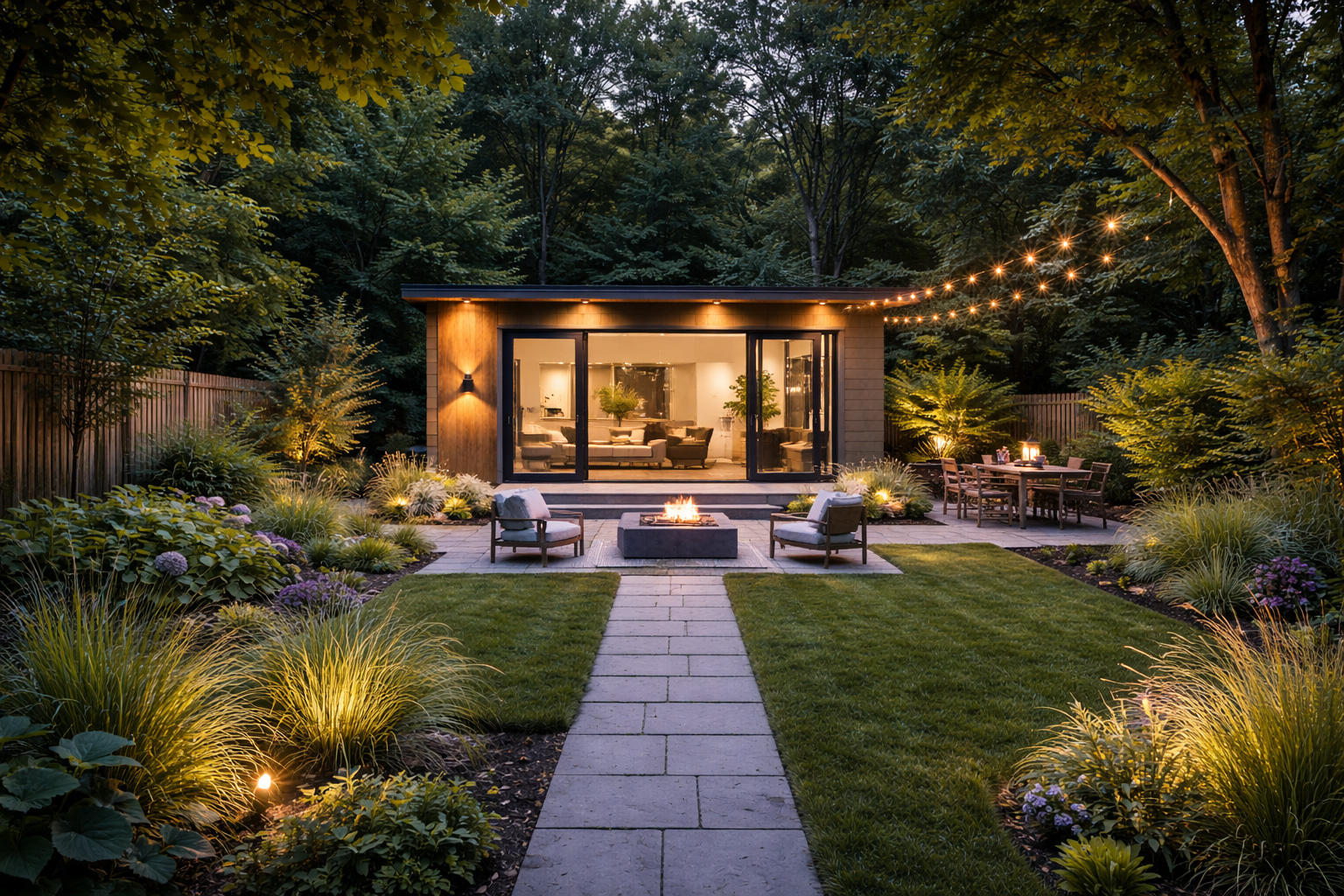







The Select Design Build has More Than 10 Years experience in Design & Build of luxury Custom houses.
As pioneers in designing and constructing advanced technology facilities, our architectural solutions stem from a collaborative process. This process empowers our multidisciplinary teams to share knowledge, embrace new technology, and craft innovative design solutions.
Our Process, From Concept to Backyard Suite Completion
A structured process keeps the project predictable. Backyard builds move fast once construction begins, so clarity up front is the strongest lever for timeline control.
- Discovery and site review: We review your goals, lot conditions, and project constraints.
- Feasibility and budget range: We confirm practical direction and outline a realistic scope.
- Design development: We refine layout, massing, and key details that impact approvals and buildability.
- Permit drawings and submissions: We coordinate documentation and respond to feedback as needed.
- Preconstruction planning: We map milestones, procurement, and site logistics.
- Construction and inspections: We manage sequencing, quality checkpoints, and inspection coordination.
- Closeout and handover: We complete the walkthrough, finalize the punch list, and deliver handover documentation.
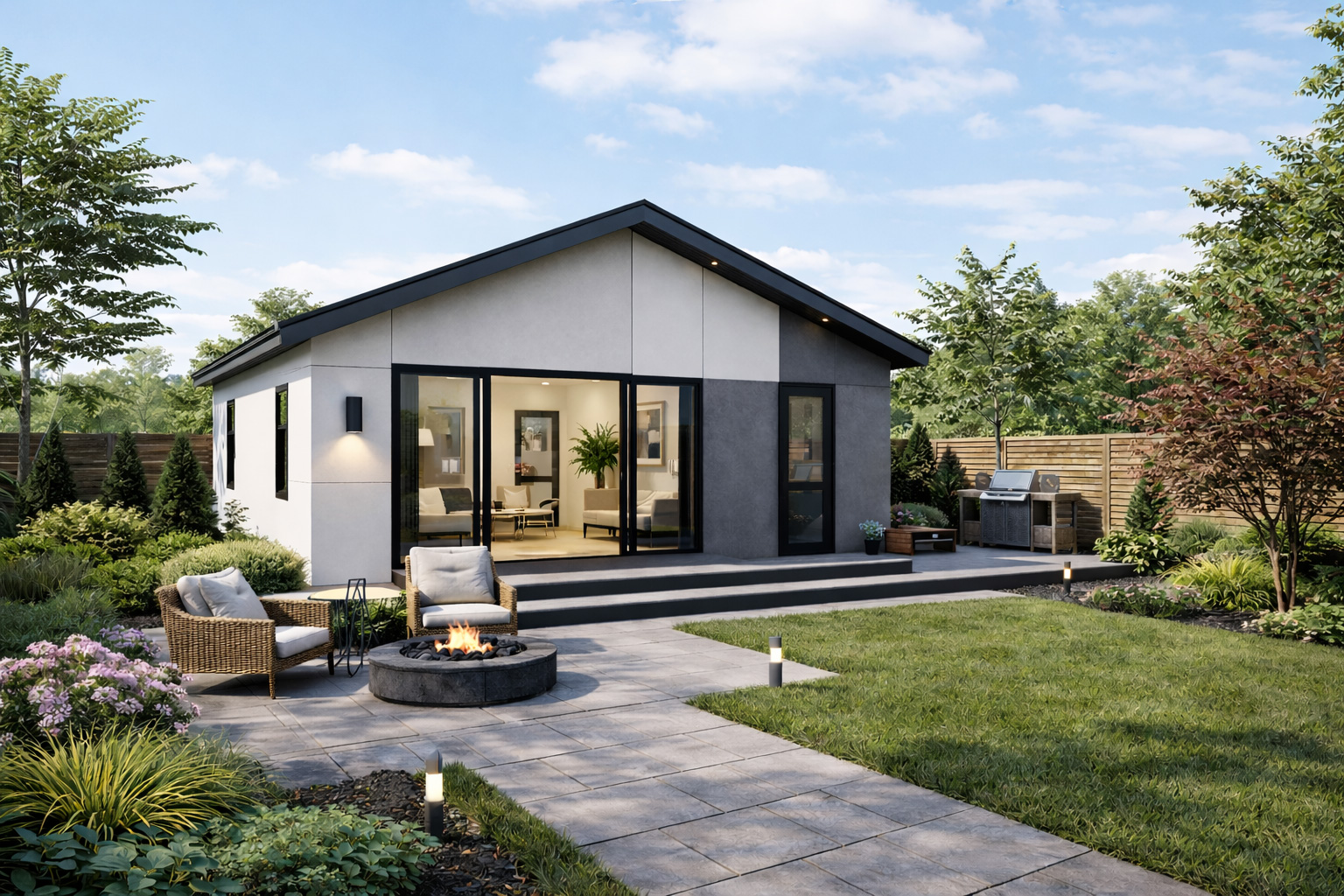
If you want a clear answer for your property, the fastest path is a feasibility review that confirms what is realistic and what needs approval attention before major design work begins.
Design-Build Garden Suites and Laneway Suites in Toronto
Backyard housing projects involve more coordination than most homeowners expect. You need design planning, zoning and permit alignment, and a construction plan that respects a tight site. Design-build keeps that coordination under one team. Instead of managing separate parties and hoping information transfers correctly, you get a single workflow from concept through inspections and closeout.
With a design build garden suite Toronto approach, we validate constructability early, align layout choices with servicing realities, and plan selections in the right order. The same applies to design build laneway suite Toronto projects, where access, privacy, and long-term durability need consistent coordination. A unified plan supports clearer milestones, fewer gaps, and stronger accountability.
Feasibility and Zoning Review for Garden Suites Toronto
A feasibility review protects your schedule and budget. Before you invest heavily in design, we assess the site and confirm the practical constraints that shape your project. That includes lot dimensions, access and staging options, existing site conditions, and a realistic servicing strategy. We also evaluate the design implications of placement, privacy, and outdoor space so the suite complements the property instead of disrupting it.
For many properties, understanding zoning requirements garden suite Toronto projects may face is the key early step. When feasibility is confirmed early, your design development remains realistic and your approval pathway remains more predictable.
Permits for Garden Suites and Laneway Homes in Toronto
Permits are a core part of planning. A garden suite permit Toronto pathway and a laneway suite permit Toronto pathway depend on the property and the proposed design. Most projects require permit-ready drawings and coordinated submissions. The goal is simple, align the design with approvals so construction can proceed on a clear timeline.
Many owners ask about a building permit laneway suite Toronto process because they want to understand how long approvals can take and what documents are required. We coordinate the planning and documentation as part of the design-build workflow so drawings, submissions, and construction scopes match.
Pre-Approved Plans for Garden and Laneway Suite Plans Toronto
Pre-approved plans can be a helpful reference point, especially when you want a faster path into early planning. When people search for pre approved garden and laneway suite plans Toronto, they are often trying to reduce design time and improve predictability. In practice, pre-approved options can support early direction, but your property conditions still matter.
Site realities such as access, servicing strategy, existing structures, and your specific goals can make a custom plan the better choice. The best approach is to review your property first, then decide whether a pre-approved direction fits, or whether a tailored design will lead to fewer compromises and better long-term performance.
Garden Suite vs Laneway Home,
Which Option Fits Your Lot
Choosing between a garden suite and a laneway home depends on your property layout, access, privacy priorities, and the most practical servicing strategy. Some owners prioritize backyard lifestyle and landscaping integration. Others prioritize laneway access and separation from the main home. The table below helps you compare key factors.
Feature | Garden Suite | Laneway Home |
|---|---|---|
Primary access | Typically through the yard from the main street side | Typically oriented to the laneway for entry and access |
Privacy | Good privacy, depends on yard layout and placement | Often strong separation and independence when access is via laneway
|
Lot suitability | Works when backyard size and layout support a detached structure | Works when laneway access exists and site constraints allow |
Utility servicing | Servicing strategy depends on site and existing connections | Servicing strategy depends on laneway conditions and site connections |
Build logistics | Site staging and access planning is essential | Laneway access can support logistics, still requires careful planning |
Approval complexity | Depends on lot conditions and design scope | Depends on lot conditions and design scope |
In some cases, projects need approvals beyond standard steps. When a design requires relief from certain requirements, a Committee of Adjustment pathway and minor variance request may apply. If your project moves in that direction, our Committee of Adjustment Applications support keeps the submission aligned with the build plan. For drawings and permit coordination, our Architectural Drawings & Permit Coordination service integrates directly into the project timeline.
If you are looking for a garden suite builder Toronto homeowners choose for a clear process, or a laneway home builder Toronto team that can handle permits and construction under one plan, this workflow provides structure and accountability.
Timeline and Milestones for
Garden Suites and Laneway Homes
Timelines vary based on approvals, scope, servicing complexity, and procurement. A milestone-based plan gives you clarity and reduces uncertainty by placing key decisions early. Instead of guessing dates, we define phases and decision points so the project remains organized from feasibility through closeout.
Phase | What happens | Typical ranges |
|---|---|---|
Feasibility and early planning | Site review, constraints check, scope outline, early budget range | 2 to 6 weeks |
Design development | Layout refinement, coordination, permit-ready detailing | 6 to 12 weeks |
Permits and approvals | Submissions, revisions, approvals pathway | Variable |
Preconstruction planning | Milestones, procurement, site logistics planning | 2 to 5 weeks |
Construction and inspections | Build execution, quality checkpoints, inspection coordination | Variable |
Closeout and handover | Walkthrough, punch list, handover documentation | 1 to 4 weeks |
Cost Drivers, What Impacts
Budget for a Backyard Suite
Owners often ask about garden suite cost or laneway home cost, but budget depends on site constraints and project scope. Backyard builds include unique cost drivers, utility servicing, access logistics, foundation strategy, and finishing level. Clear scoping and early coordination are the strongest tools for protecting budget.
Cost Driver | Why it Matters | Budget control approach |
|---|---|---|
Servicing and utilities | Connections and routing affect design and construction complexity | Early servicing strategy tied to layout decisions |
Site access and logistics | Tight access impacts deliveries, staging, and productivity | Logistics planning and realistic sequencing |
Foundation approach | Site conditions influence foundation scope and timeline | Feasibility checks and buildable detailing |
Finishing level | Kitchen, bath, flooring, and lighting scope shape cost | Selection planning with priority tiers |
Approval complexity | Revisions and additional steps can shift timeline and cost | Compliance-focused planning from the start |
Quality Standards, Site Management,
and Warranty
A backyard suite needs the same durability standards as a primary home. Quality control depends on disciplined sequencing and checkpoints, framing accuracy, moisture management, insulation continuity, window and door installation, and finish consistency. We manage these checkpoints during construction so issues are resolved early while access is easy and corrections are efficient.
Site management also matters because backyard builds often require careful staging and neighbor-aware logistics. Clean operations, controlled deliveries, and predictable sequencing protect productivity and reduce disruption. At closeout, you receive a structured walkthrough and a clear plan for final items, along with straightforward warranty expectations.
Use Cases, Rental Income, Family Space, and Home Office
Garden suites and laneway homes support different lifestyles and investment goals. Some owners pursue a laneway suite to generate rental income. Others want a private space for parents or adult children while keeping proximity and independence. Many clients also build a backyard suite as a quiet home office or studio that separates work from the main home.
The best project outcomes start with clarity on your use case. Once the purpose is defined, we align layout decisions, servicing strategy, and finishing tiers to match long-term comfort, durability, and operational simplicity.
Areas We Serve in Toronto and the GTA
We build garden suites Toronto homeowners request and laneway homes Toronto property owners pursue across the city and the GTA, depending on scope and scheduling. Many projects take place in established neighborhoods where access is tight and approvals matter. Early feasibility work keeps planning grounded so the design stays realistic.
If you want to confirm what your property can support, share your address and your goals. We will outline the next practical step and the key feasibility questions that shape approvals, timeline, and budget.
If you want a garden suite builder Toronto team or a laneway home builder Toronto partner that can deliver design, permits, and construction through one coordinated plan, we are ready to help. Share your property details and goals, and we will confirm feasibility, outline the permit pathway, and map a practical timeline with clear milestones.
Book a consultation through our contact form or call our team to discuss your project.
What is a garden suite in Toronto?
A garden suite is a detached, self-contained living space built in the backyard, designed for long-term use as a separate dwelling.
What is a laneway home in Toronto?
A laneway home is a separate dwelling typically oriented to a laneway for access, offering strong privacy and independent use.
Do I need a garden suite permit in Toronto?
Most projects require permit-ready documentation and an approval pathway aligned with scope and site realities. Feasibility review clarifies the process.
Do laneway homes require building permits?
Yes, laneway homes typically require permit-ready drawings and coordinated submissions before construction begins.
Can I use pre-approved plans for a garden suite?
Pre-approved plans can help with early direction, but your property conditions and goals still matter. A site review helps confirm whether that route fits.
How long does it take to build a laneway suite?
Timelines vary by approvals, scope, and servicing complexity. A milestone-based plan provides structure from feasibility through closeout.
What affects the cost the most?
Utility servicing, site access, foundation strategy, finishing level, and approval complexity are common cost drivers.
Can a backyard suite be rented out legally?
A legal rental outcome depends on permits, compliance, and approvals aligned with the final build scope. Planning the project properly from the start supports legality and long-term performance.

Request a consultation through our contact form or call our team to discuss your project.
