
Before starting a home renovation in Toronto, one of the first questions homeowners ask is whether home renovation permits in Toronto are required. In general, the city requires permits whenever a project changes the structure of the home, affects plumbing or major systems, or alters how a space is used. Understanding these rules early helps avoid delays, fines, and complications later in the project, especially when planning larger upgrades like basement conversions, additions, or deciding whether to tear‑down or renovate in Toronto.
The General Rule: When Are Home Renovation Permits in Toronto Required?
In Toronto, the rule is fairly straightforward: if a renovation changes the structure of the home, affects major systems, or alters how a space is used, a permit is usually required.
These requirements come from the Ontario Building Code and Toronto’s municipal regulations. The goal is to make sure renovations meet safety standards for structure, fire protection, ventilation, and overall building performance.
Projects that typically require a permit include:
- Removing or modifying load‑bearing walls
- Building a home addition or adding a second storey
- Basement underpinning or lowering the basement floor
- Creating a secondary suite or basement apartment
- Installing or relocating plumbing lines
- Building structures such as decks, porches, or detached garages
Cosmetic upgrades are usually different. Work like painting, replacing flooring, or installing new cabinets without changing plumbing or structure generally does not require a permit.
The line can become blurry in real projects. A kitchen renovation, for example, may start as a cosmetic update but end up involving plumbing relocation or structural changes. Once those elements are involved, the project typically falls under Toronto’s permit requirements and must be approved before construction begins.
Next, we’ll look at the specific types of home renovation permits in Toronto.
Types of Permits You May Need
Securing home renovation permits in Toronto often involves more than one type of approval. The exact approvals depend on what part of the house you’re changing and which systems are affected. Structural work, plumbing modifications, electrical upgrades, and zoning compliance are typically reviewed separately, which is why larger projects often move through several approval steps before construction begins.
Below are the home renovation permits in Toronto most commonly involved in residential projects.
Building Permit
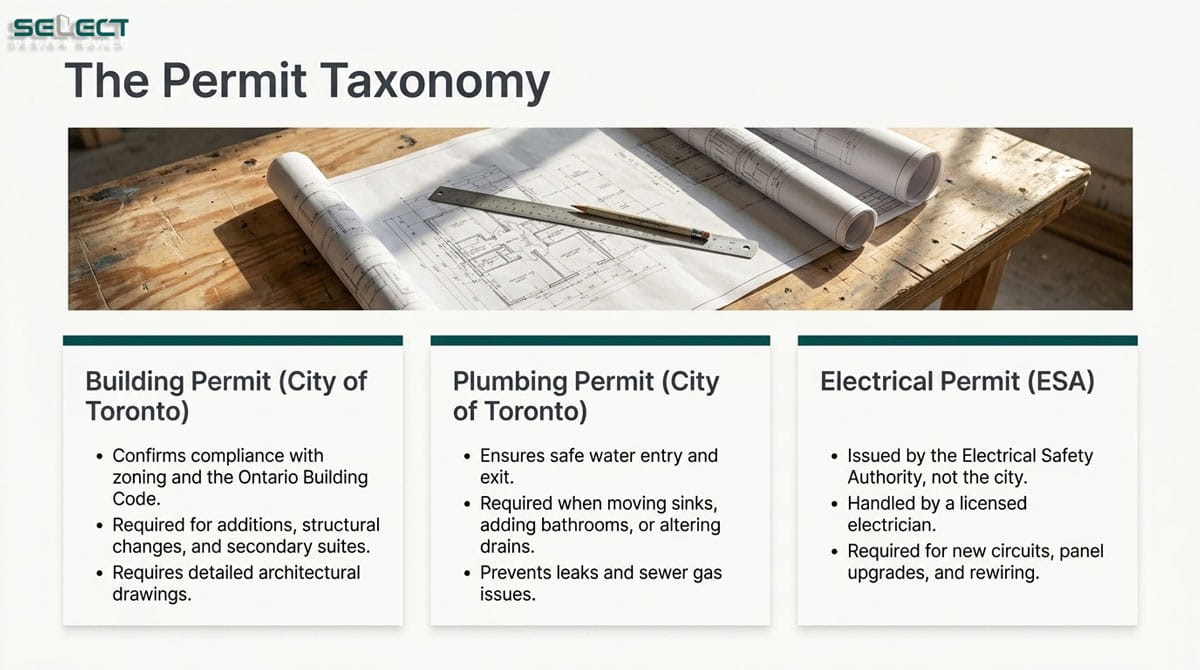
This is the primary permit issued by the City of Toronto and the one most homeowners hear about first. A building permit confirms that the proposed renovation meets the Ontario Building Code, local zoning bylaws, and safety standards.
Typical projects that require a building permit include:
- Building a home addition or adding a second storey
- Basement underpinning or lowering a basement floor
- Removing or modifying load‑bearing walls
- Constructing decks, porches, or garages
- Creating a secondary suite
To apply, the city requires architectural drawings that clearly show the existing structure and the planned changes. These plans allow municipal reviewers to confirm structural safety and code compliance before work begins.
Plumbing Permit
Not every renovation touches the plumbing system, but when it does, the city requires a separate plumbing permit.
Think of it as approval for any work that changes how water enters, moves through, or exits the house. Common examples include moving a kitchen sink, adding a basement bathroom, or installing plumbing for a new laundry room.
Without this permit, inspectors cannot verify that the new pipes, drains, and venting meet building code standards or connect properly to the municipal system. That verification is critical for preventing leaks, sewer gas issues, and long‑term infrastructure problems.
Electrical Permit (ESA)
Electrical permits in Ontario are handled differently from most other approvals. Instead of the city, they are issued by the Electrical Safety Authority (ESA).
Renovations that usually require an ESA permit include:
- Installing new electrical circuits
- Upgrading or replacing the electrical panel
- Rewiring parts of the home during major renovations
- Adding new lighting systems, outlets, or heated flooring
In practice, the permit is usually filed by a licensed electrician, who also arranges the required ESA inspections during and after the work.
Home Renovation Permits in Toronto by Project Type
Home renovation permits in Toronto depend heavily on the type of project and which parts of the house are affected. Cosmetic upgrades often move forward without approvals, while projects that involve structure, plumbing, or new living spaces usually require permits.
Here’s how the rules typically apply to common renovation projects.
Kitchen Renovations
Simple kitchen updates usually don’t require a permit. Replacing cabinets, countertops, backsplash, or appliances is considered cosmetic work if the layout stays the same.
A permit may be required if the renovation includes:
- Moving plumbing lines
- Removing a load‑bearing wall
- Installing new windows or exterior doors
- Structural framing changes
Bathroom Renovations
| Renovation type | Permit usually required? |
| Replacing tiles, vanity, toilet, or fixtures in the same location | No |
| Moving plumbing lines or drains | Yes |
| Adding a new bathroom | Yes |
| Structural wall or floor changes | Yes |
Projects that move or add plumbing typically require a plumbing permit.
Basement Finishing & Underpinning
Basement renovations often need permits because they change how the space is used.
Common examples include:
- Finishing an unfinished basement
- Creating a basement apartment or secondary suite
- Basement underpinning or floor lowering
Moisture control is also a major consideration in older homes, and many projects uncover issues related to basement moisture problems during Toronto renovations during the planning stage.
Home Additions & Second‑Storey Additions
Any project that increases the size of the house requires a building permit and detailed drawings.
These renovations are reviewed for structural safety, zoning compliance, and building code requirements. If the design exceeds setback or height limits, the project may also require approval from the Committee of Adjustment.
Removing or Altering Load‑Bearing Walls
Open‑concept layouts often involve removing structural walls. Because these walls support the structure above, the city requires a permit and structural review before the work can begin.
The solution typically involves engineered beams or support posts to safely transfer the load.
Decks, Porches, and Garages
Outdoor structures can also require permits, especially when they are attached to the house or raised above ground level.
Permits are commonly needed for:
- Attached decks
- Raised decks
- New porches
- Detached garages
Secondary Suites & Garden Suites
Creating additional residential units almost always requires permits because multiple systems are involved.
These projects may include approvals for:
- Structural construction
- Plumbing and electrical work
- Fire separation and safety requirements
- Zoning compliance
Projects like laneway homes or backyard units also involve unique planning rules, and many homeowners first review the cost of building garden suites and laneway homes in Toronto before moving forward with permits.
Next, we’ll look at renovations that usually don’t need a permit, which helps clarify where the boundary is between cosmetic upgrades and regulated construction.
When Home Renovation Permits in Toronto Aren’t Required
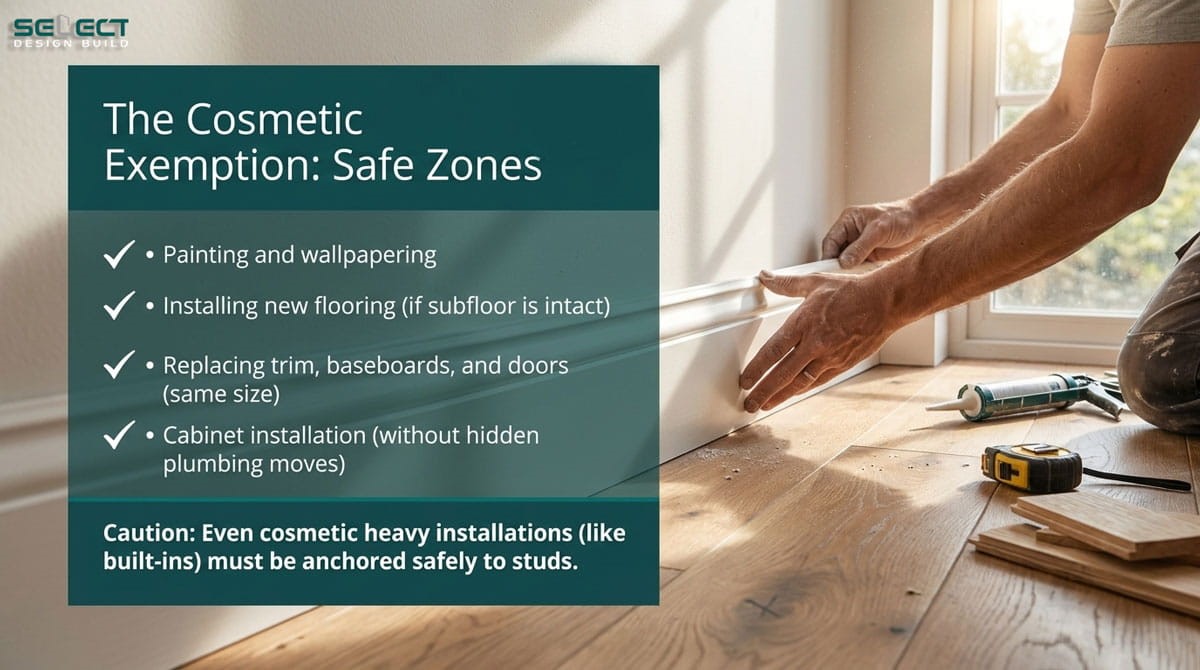
Many home improvement projects are purely cosmetic and fall outside the scope of home renovation permits in Toronto. If you aren’t changing the structural integrity, major systems, or the designated use of a space, you can generally proceed without city approval.
Common examples include:
- Painting and wallpapering
- Replacing interior finishes like baseboards, crown molding, or trim
- Installing new flooring (assuming the existing subfloor remains intact)
- Cabinet and countertop installation, provided no plumbing or electrical lines are relocated
- Replacing existing doors or windows with new units of the same size and location
- General landscaping and fencing, although local bylaws regarding height and materials still apply
Proceed with caution: Even if a project is cosmetic, it is wise to keep it aligned with general safety standards. If you are installing heavy built-in cabinetry, ensure it is anchored correctly to the studs. If you are ever unsure whether your project might inadvertently impact structural framing or hidden electrical wiring, a quick check with the City of Toronto’s building department or a professional designer is always the safest route to avoid potential issues.
Next, we will cover what happens if you renovate without a permit, as the consequences can be significant for homeowners.
What Happens If You Skip Home Renovation Permits in Toronto?
Skipping home renovation permits in Toronto might seem like a shortcut to save time and money, but it is a gamble with your largest financial asset. The City of Toronto is proactive about monitoring construction, and unpermitted work is rarely as “hidden” as many homeowners hope.
The consequences go far beyond a simple visit from an inspector:
Insurance Denials
This is arguably the most dangerous risk. If a fire, flood, or structural failure occurs in an area of your home that was renovated without a permit, your insurance provider has the right to deny your claim. They can argue that the unpermitted work failed to meet safety codes, essentially nullifying your coverage for that portion of the property.
Resale Complications
When you decide to sell, your property becomes subject to scrutiny. Home inspectors and real estate lawyers will ask for permits regarding major additions or structural changes. If you cannot produce them, buyers may walk away, or you may be forced to obtain “retroactive permits.” This process is often more expensive, stressful, and invasive than the original permit process, as you may need to open up walls to prove that what is hidden behind them meets current code standards.
Orders to Comply
If a building inspector receives a complaint, often from a neighbor, they have the legal authority to enter your property and issue a “Stop Work Order” or an “Order to Comply.” If the work does not meet safety regulations, the city can mandate that you tear down the work entirely, correct the issues, and potentially pay fines for the violation.
Ultimately, home renovation permits in Toronto act as a safeguard that ensures your project is safe, insurable, and adds legitimate value to your home.
Next, we will look at how long the permit process typically takes in Toronto, helping you set realistic expectations for your project timeline.
How Long Do Home Renovation Permits in Toronto Take?
Timelines for home renovation permits in Toronto depend entirely on the complexity of your project and the city’s current application volume. While minor permits can sometimes be processed in a few weeks, major structural renovations or additions typically require several months of lead time.
The biggest factor affecting your timeline is the quality of your submission. If your architectural drawings are incomplete or fail to meet the Ontario Building Code, the city will return them for revisions, which effectively resets the clock.
Projects requiring Committee of Adjustment approval, such as garden suites or significant home additions, take even longer due to mandatory hearing and review periods. The most reliable way to shorten this process is to work with a design team that provides a complete, code-compliant plan from the start, minimizing the need for back-and-forth communication with city reviewers.
Next, we will cover how much these permits cost, providing a clearer picture of what you should budget for the regulatory side of your project.
How Much Do Home Renovation Permits in Toronto Cost?
The cost of home renovation permits in Toronto depends on the type and size of the project. The city usually calculates building permit fees based on the square footage of the construction area, while plumbing or electrical permits are charged separately.
Typical ranges homeowners encounter:
- Small interior renovations: a few hundred dollars
- Basement finishing or structural changes: often 1,000–3,000+
- Home additions or major structural projects: several thousand dollars depending on size
These fees only cover the city permits themselves. Architectural drawings, engineering reports, and application preparation are separate costs that are usually required before submitting to the city.
Because permits are just one part of the overall budget, many homeowners plan them alongside the full home renovation costs in Toronto, which include design, materials, labor, and inspections.
Conclusion
Understanding home renovation permits in Toronto is an essential part of planning any project. Projects that affect structure, plumbing, electrical systems, or the use of a space usually require approval from the city before work begins. Checking the requirements early and preparing proper drawings can prevent delays, fines, and costly corrections later, while helping your renovation move forward smoothly and in full compliance with local building regulations.