
Navigating the Heritage Home Renovation Rules in Toronto is essential for anyone updating a historic property in neighborhoods like Cabbagetown or The Annex. Balancing modern upgrades with strict municipal preservation laws requires knowing exactly what you can legally alter before construction begins. At Select Design Build, we simplify this regulatory process, helping you protect the architectural history of your property while creating a functional, modern space.
Understanding Heritage Home Renovation Rules in Toronto
The City of Toronto manages historic properties under the Ontario Heritage Act to protect cultural value. Before planning any layout changes or looking into what permits are needed for a home renovation in Toronto, you must verify how your specific property is classified on the Heritage Register. The rules vary significantly depending on this classification.
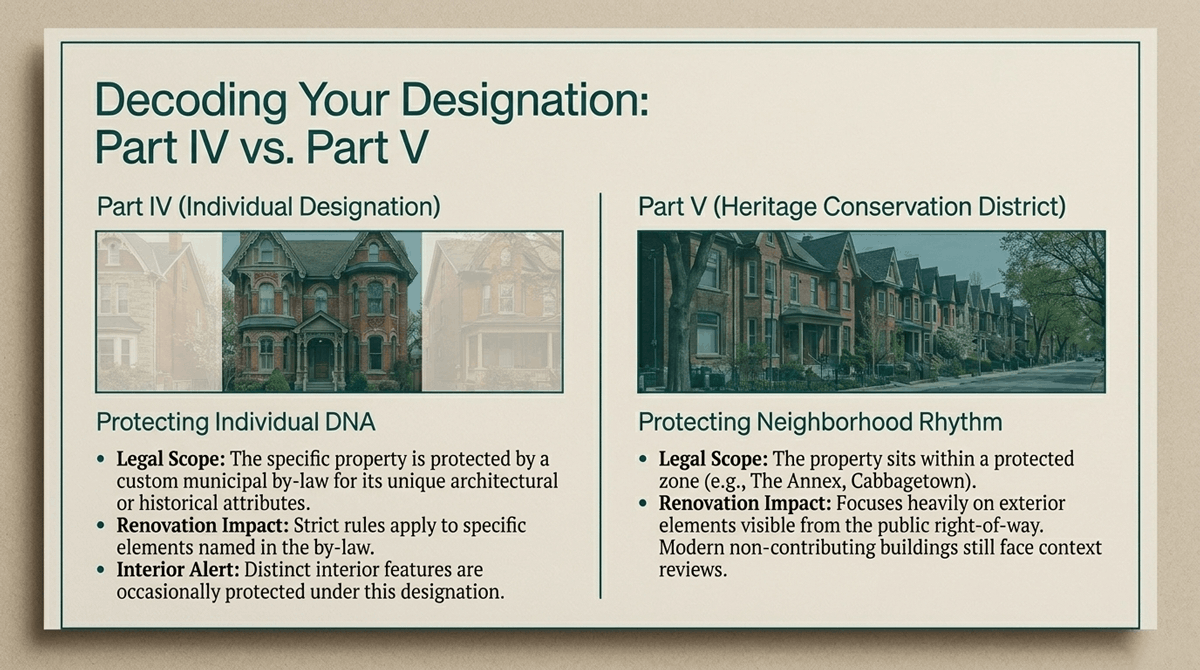
The Part IV vs. Part V (HCD) Difference
The level of restriction on your property depends entirely on whether it is protected individually or as part of a historic neighborhood. The following breakdown outlines how these specific designations interact with the core Heritage Home Renovation Rules in Toronto that dictate your project scope:
| Designation Type | Legal Scope | Renovation Impact |
| Part IV (Individual) | The specific property is designated by a custom municipal by-law due to unique architectural or historical attributes. | Strict applications of the Heritage Home Renovation Rules in Toronto apply to specific elements outlined in the designation by-law, which can occasionally include distinct interior features. |
| Part V (Heritage Conservation District) | The property sits within a protected zone (e.g., The Annex, Cabbagetown) to preserve the character of the collective streetscape. | Focuses heavily on the exterior elements visible from the public right-of-way. Modern “non-contributing” buildings in the zone still face context reviews. |
Understanding these categories and how they influence the Heritage Home Renovation Rules in Toronto saves months of architectural revision. While Part IV protects the specific DNA of a single building, Part V ensures that any changes you make blend seamlessly with the historic rhythm of the surrounding neighborhood.
The Golden Rule: What You Can Never Change
The main objective of heritage planning is maintaining the visual story of the neighborhood. City planners rarely permit changes that alter the historic fabric visible to the public. If your project demands a complete architectural overhaul, you must analyze whether a tear-down or renovate strategy makes the most sense for your property before committing to a heritage site.
Compliance with Heritage Home Renovation Rules in Toronto
The street-facing exterior is legally protected, meaning all external updates must strictly align with the Heritage Home Renovation Rules in Toronto. You cannot alter, remove, or replace character-defining elements without facing severe penalties under the Ontario Heritage Act. The specific boundaries of what must remain untouched include:
- Architectural Features: Original porches, verandas, decorative wooden trim, gables, and original window openings cannot be altered in size or position.
- Historical Masonry: Toronto heritage homes built before the 1940s utilize soft brick and lime-rich mortar. You cannot sandblast these surfaces, use hard modern cement mortar, or apply non-permeable paint, as these actions trap moisture and permanently scar the historic structure.
- Eaves and Roof Forms: The original roofline profile, including historic dormers, chimneys, and slate tile details, must be meticulously preserved or repaired using identical materials.
- Visible Material Match: If a front-facing window sash or exterior door is completely beyond repair, it must be replaced “in-kind,” meaning the new unit must perfectly replicate the original wood profiles, muntin patterns, and dimensions.
What You Can Change and Modernize?
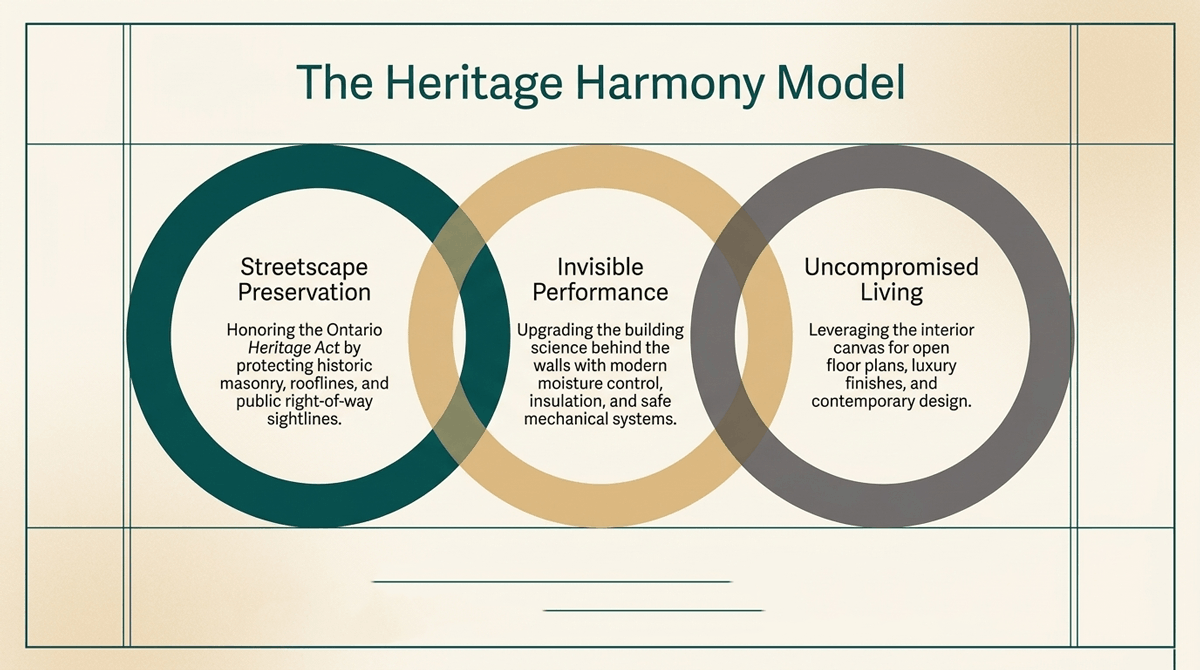
The Preservation Reality: Heritage status is designed to protect the historic streetscape, not to force you to live in a museum. The city explicitly supports updating the functionality of older homes, provided the core structure is respected.
Interior Upgrades and Layouts
For the vast majority of Toronto properties, the interior is your canvas. Unless a specific internal feature is legally named in a Part IV designation by-law, you are completely free to modernize the living space:
- Floor Plans: Removing non-load-bearing walls to create open-concept living areas and brighter spaces.
- Kitchens & Baths: Installing luxury modern kitchens, custom millwork, and contemporary bathrooms.
- Finishes: Replacing worn flooring, repairing drywall, and updating interior doors or light fixtures.
Energy Efficiency, HVAC, and Insulation
Historic homes are notoriously drafty, but major performance upgrades are entirely permissible behind the scenes:
- Mechanical Systems: Replacing dangerous knob-and-tube wiring, upgrading electrical panels, and installing high-efficiency heat pumps.
- Moisture Control: Implementing proper drainage systems, which is the foundational step in solving basement moisture problems during Toronto renovations before finishing any lower level.
- Insulation Upgrades: Adding modern insulation to attics and interior wall cavities to significantly drop monthly energy bills.
- Hidden Approvals: Verifying what permits are needed for a home renovation in Toronto before extending plumbing lines or modifying rear envelopes to remain fully compliant with the Heritage Home Renovation Rules in Toronto.
Conclusion
Successfully updating a historic property requires a delicate balance between respecting the past and implementing modern building science. Navigating the complex Heritage Home Renovation Rules in Toronto doesn’t have to stall your dream project when you work with the right team. If you are ready to transform your historic property into a high-performance, beautiful space, explore our professional Home Renovation services at Select Design Build, where we handle everything from heritage compliance to premium custom execution.